1. A City Awakened by Water
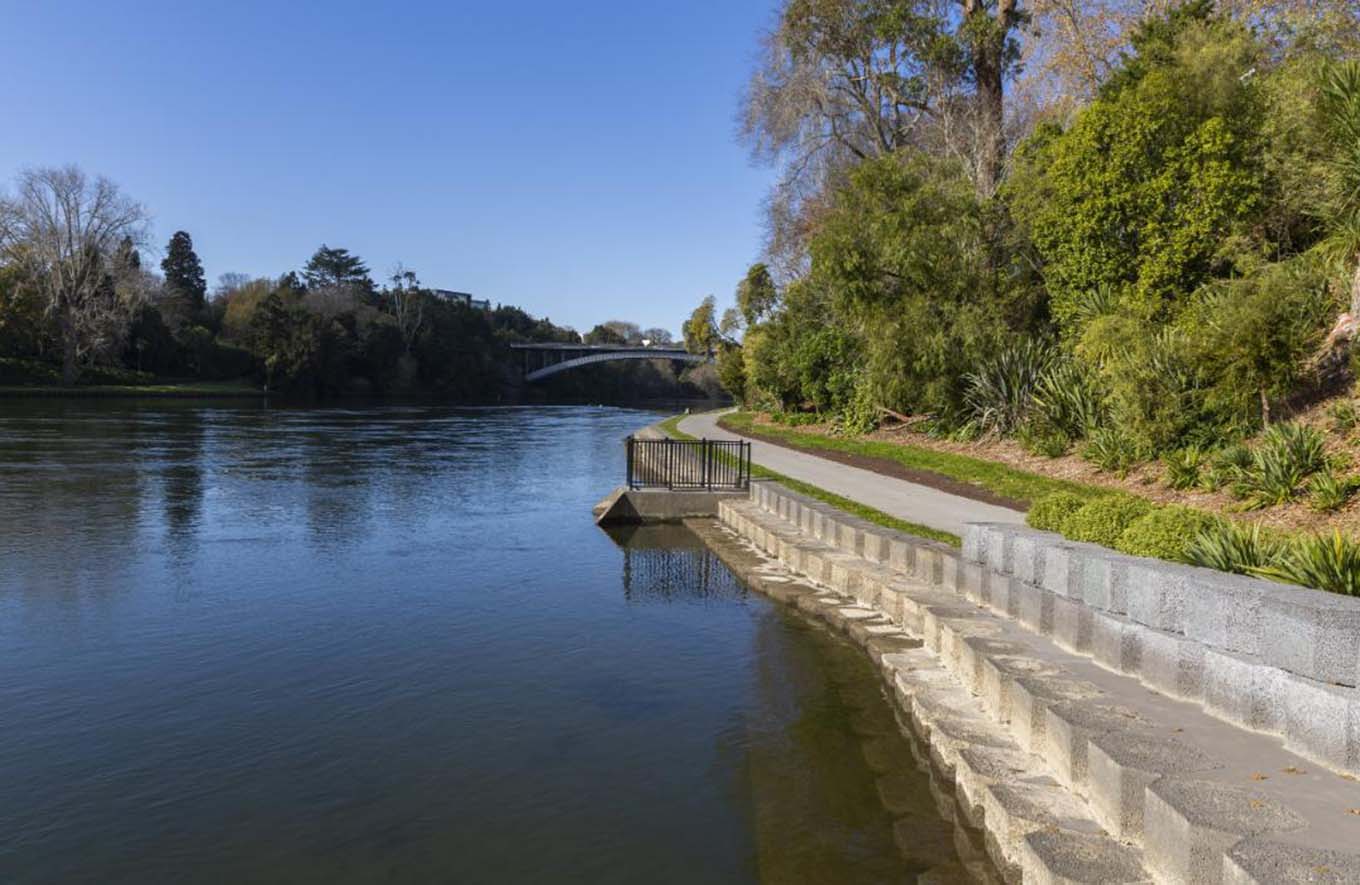
The day began with a low mist clinging to the ground, as though the earth were reluctant to release the secrets it held beneath the surface. The streets of Hamilton stirred gently—no horns, no chaos—just the slow emergence of movement. The air smelled faintly of damp stone, pine, and the distant trace of morning coffee. In the distance, the Waikato River stirred with the same deliberate grace, its surface calm yet shifting, flowing like a long-held breath being slowly exhaled.
There is a patience to riverside cities. Time doesn’t impose itself in the same way. Instead, it seems to spread outward like ripples. Hamilton, with its heart wrapped around the mighty Waikato, offers a different kind of experience—one rooted not in spectacle but in presence. The river doesn’t announce itself; it reveals itself slowly, over miles, over hours, over every footstep placed in rhythm beside its winding course.
2. Hamilton Gardens: Where Time and Design Converge
The journey began at Hamilton Gardens, a sprawling sanctuary that exists somewhere between design and dream. Few public gardens in the world have achieved what this one has—transforming horticulture into a series of immersive, narrative spaces. But this isn’t merely a place of botanical beauty; it’s a meditation on civilization, a gallery of time.
Wandering through the Indian Char Bagh Garden, where water channels slice through symmetrical marble pavilions, the air felt charged with the echoes of Mughal emperors and Sanskrit verses. A few steps later, the geometric mastery of the Italian Renaissance Garden transported me to a hillside villa overlooking Florence, complete with sculpted hedges and bubbling fountains. The Tropical Garden buzzed with the humid perfume of orchids and bromeliads, while the Māori Garden – Te Parapara stood silently powerful, layered with cultural meaning and native plants cultivated in traditional ways.
From these constructed realms, the transition to the riverside felt seamless. Below the gardens, pathways wound downward to meet the Waikato River Walkway, not with ceremony but with humility. Nature greeted artifice, and they shook hands in dappled shade.
3. The Waikato River Walkway: A Living Artery
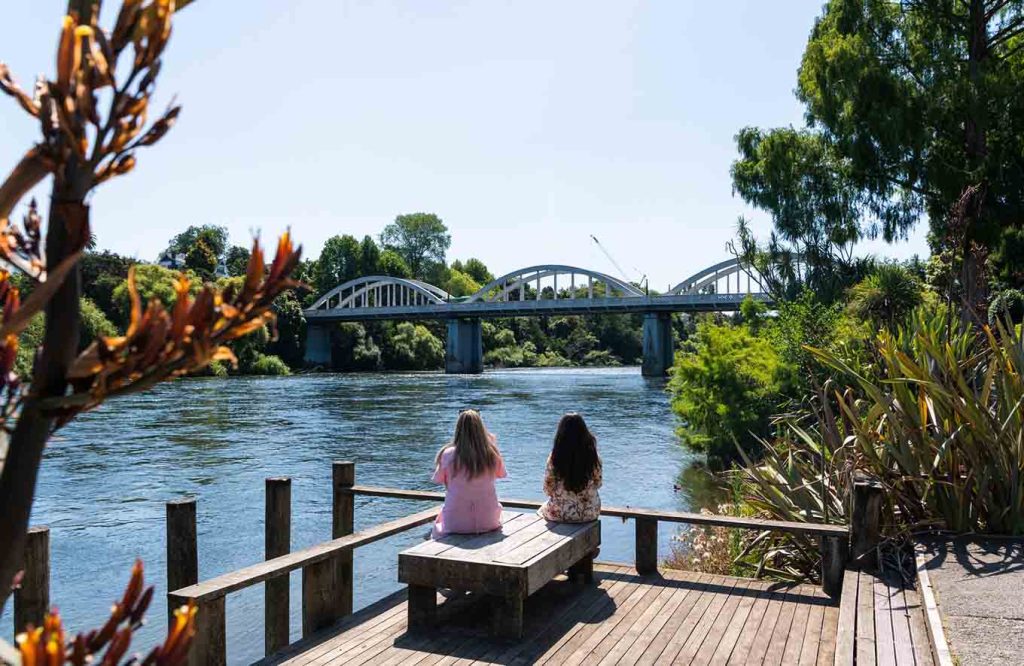
Stretching for over 11 kilometers within city limits, the Waikato River Walkway threads its way alongside the river, weaving through neighborhoods, parks, gardens, and bushland. Every section told a different story. As I stepped onto the compacted gravel trail, I immediately sensed the calm that only riverside walking can bring—the constancy of flow beside the movement of thought.
The path south of the gardens was quiet. A mist still clung to the tree trunks, and moisture collected on the silver ferns like glass beads. Tī kōuka (cabbage trees) stood like sentinels, their long fronds pointing in every direction like ancient navigators. Birdsong filtered through the foliage: grey warblers with their high, spiraling trills, the occasional clicking alarm of a pīwakawaka (fantail) hopping erratically along the path ahead of me.
4. Connecting Through Green Spaces: From Day’s Park to Wellington Street Beach
Continuing northward, I passed through Day’s Park, a broad expanse of lawn where families were beginning to emerge with strollers and morning dogs. The river here widened, and the tree canopy thinned, allowing for wide sky views. Sunlight bounced across the surface of the water, and with each bend, the scenery shifted subtly: manicured hedgerows gave way to wild grass; wooden fences became root-bound riverbanks.
Reaching Wellington Street Beach, I found a surprising pocket of golden sand nestled into the river’s curve. Children were already splashing in the shallows, while a black lab leapt in pursuit of a stick, his tail wagging like a metronome. A large flat rock near the water made the perfect resting place. The sound of the river was meditative—neither loud nor distant, but present, steady.
5. Memorial Park: Where Memory Walks with Nature
The riverside route climbed gently into Memorial Park, a place designed with both reverence and utility. Stone monuments stood respectfully beneath trees, their inscriptions weathered but legible. Names etched into metal and marble. Dates that changed the course of lives.
Despite its solemn origins, the park was alive with community. Joggers cut clean lines across the path, while school groups huddled around bronze plaques recounting the city’s past. Old couples walked hand-in-hand beneath the giant tōtara trees, saying little, needing less. I paused by the cenotaph, looking out over the river below, wondering how many had stood here with hearts heavier than mine.
To the west, the path diverted temporarily into Seddon Park and adjacent residential lanes. Even away from the river, the scent of water lingered in the air, and the calls of gulls reminded me that the river, while unseen for a moment, was still near.
6. Claudelands Bridge: Steel and Stillness
Back at the river’s edge, the Claudelands Bridge rose ahead, a frame of riveted iron and purposeful strength. Crossing it on foot provided a duality of perspectives. On one side: the clean, modern facades of downtown Hamilton; on the other: a green, unruly riverbank, barely touched. Pedestrians walked in calm procession, some with headphones, some with companions, most with the look of people who had learned the value of quiet routine.
From the midpoint of the bridge, I leaned out over the rail. Beneath me, the river moved with dignity—slow, deep, confident. Ducks slipped between willow roots, and reeds swayed in underwater currents invisible to the eye. The movement was almost imperceptible but utterly constant. It reminded me of time, and how even in stillness, things progress.
7. Riverbank Lane and the Heart of the City
Descending from the bridge, I arrived at Riverbank Lane, a newer development that cleverly blends commerce and calm. Boutique stores, art spaces, and independent cafés formed a community in miniature, all facing the river. I stopped in at a small bookshop tucked beneath a timber awning and found a volume of poetry written by a local author who, it turned out, had grown up just a few streets away.
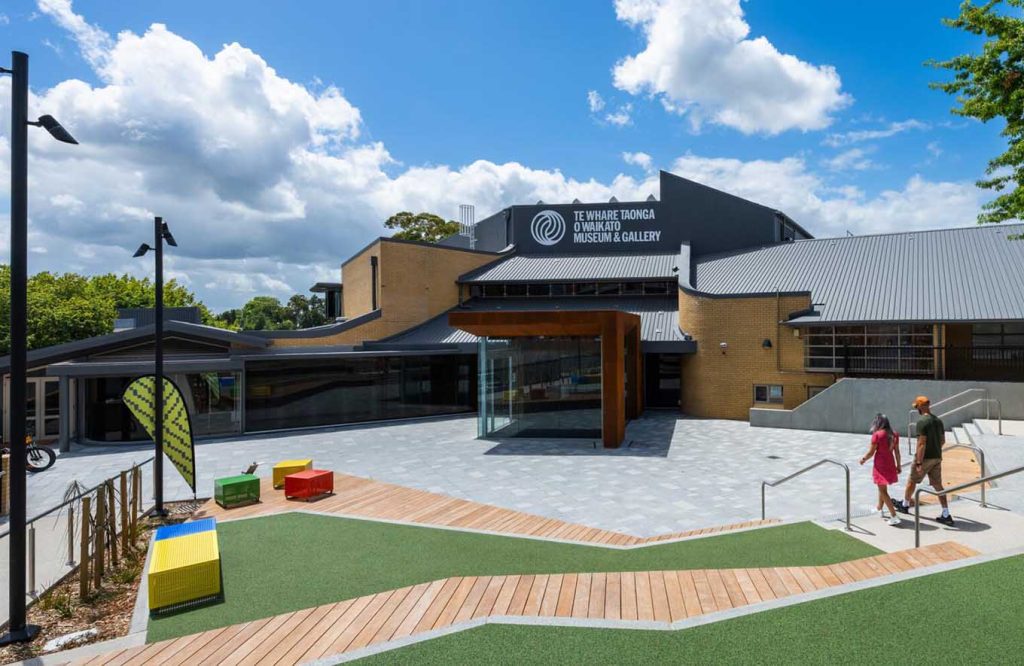
A few meters further, a flight of stairs behind the Waikato Museum delivered me to another lush stretch of riverside trail. This segment, popular with city workers during lunch breaks, featured well-placed benches, heritage sculptures, and curated plantings. A totara carving, standing taller than a man, marked a site of cultural importance—its form both ancestral and timeless.
8. Stories in the River Stones
At one bend, I noticed an elderly man stacking smooth river stones into balanced towers. His hands moved with precision, weathered fingers placing each piece not for strength but for equilibrium. Without speaking, he pointed to one, then gestured to the river, then his heart. There are conversations that don’t need words. Some riverside moments exist outside language, held together by gesture and gravity.
The river continued to reveal its layers. Just past the Grantham Street boat ramp, I watched a long waka (traditional Māori canoe) being pulled onto a trailer. The men who had paddled it wore matching black jerseys and spoke in low tones. Their presence grounded the day, offering a reminder that the Waikato is more than a body of water—it is a tupuna awa, an ancestral river.
9. Jesmond and Hammond Parks: The Sound of Solitude
As I followed the path southward, the energy shifted again. Jesmond Park emerged like a quiet thought—open space framed by low bush, popular with native birds and morning meditations. Then came Hammond Park, one of the lesser-known gems of the walkway. Here, the river narrowed slightly, and the forest grew thicker.
The trail narrowed to a boardwalk in some places, cutting through thickets of tree fern and underbrush. Birds called from all sides. Kererū burst from branches with the sound of beating wings like drums. A breeze stirred the leaves overhead, and sunlight trickled through in golden slats. Time seemed to decelerate again.
I stopped beneath a giant kahikatea and simply listened: no cars, no voices, just wind, water, and the distant hush of leaves. A sacred stillness.
10. Walking Back With Shadows
Turning to head back, the river on my left now bore the light of afternoon. Shadows lengthened. Families returned from their walks. Cyclists passed with soft greetings. The river didn’t change direction, but it did change color—from bright jade to deep bronze. Everything felt slower, more contemplative.
Passing again through the gardens, I noticed how differently they wore the light. The Tudor Garden looked theatrical now, its hedges casting dramatic shadows. The Herb Garden smelled stronger, more pungent. Every garden, every plant, had shifted in tone, reacting not to the passage of time, but to the quality of the light.
11. The Final Bend of Light
At the very end of the walk, I paused at a viewing platform overlooking the bend in the river just beyond the gardens. The water now caught the last amber tones of daylight. The city behind me murmured its evening notes—distant laughter, clinking dishes, dogs barking in far yards.
A train passed slowly across a trestle bridge in the distance. Not loud. Just steady. Like the river.
Some journeys are measured not in destinations reached, but in the quiet spaces between footfalls. In the presence of water, earth, sky, and memory. And in the silence between words.